A meniscus tear can cause pain, clicking, swelling, or a knee that catches or locks during movement. Dr. Om Baghele provides specialist diagnosis and treatment for meniscus injuries in Gondia, from conservative care to arthroscopic repair when needed.
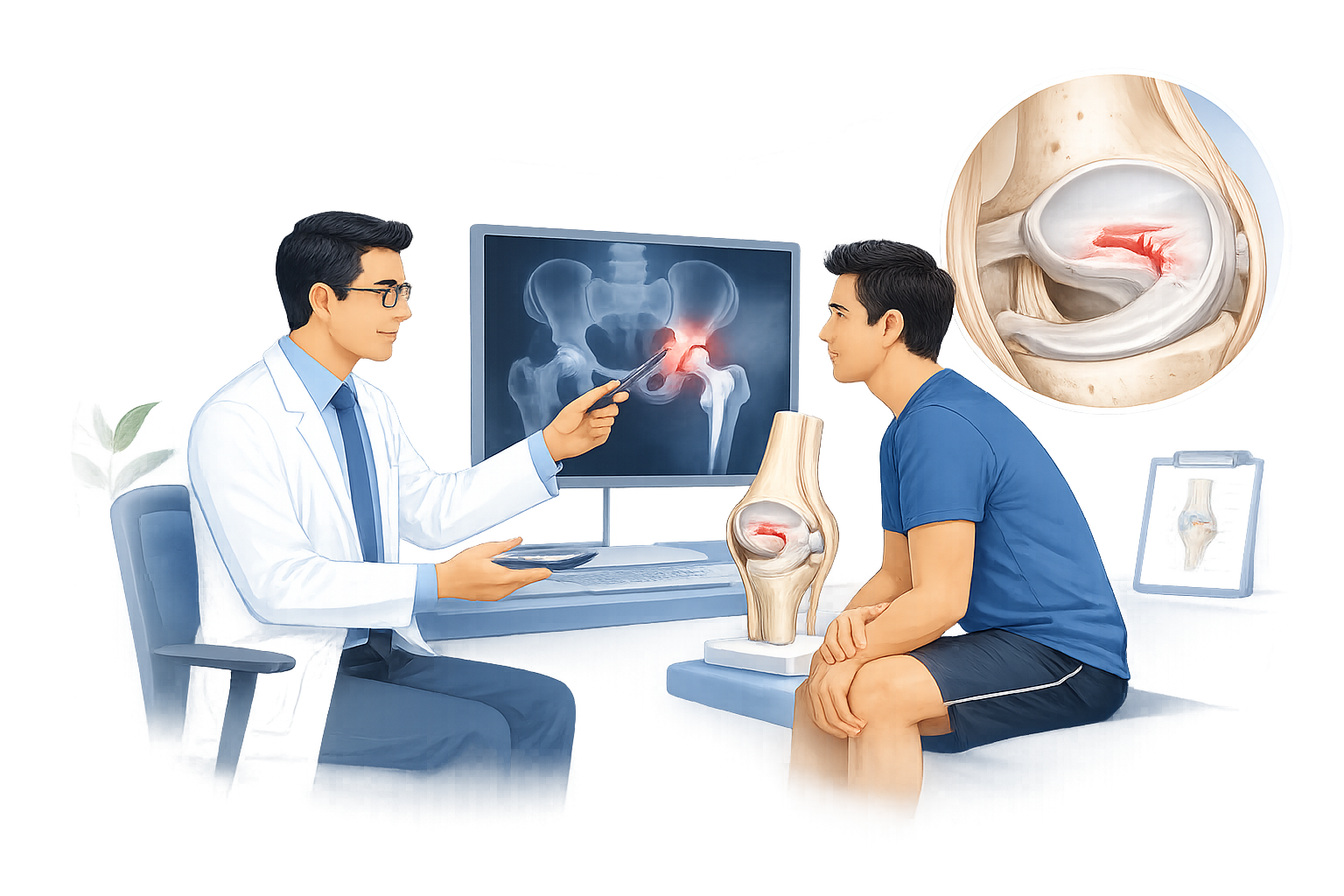
The meniscus is a piece of cartilage that cushions and stabilizes the knee joint. It can tear suddenly during a twisting injury, or gradually wear down over time, particularly in older patients with age-related degeneration.
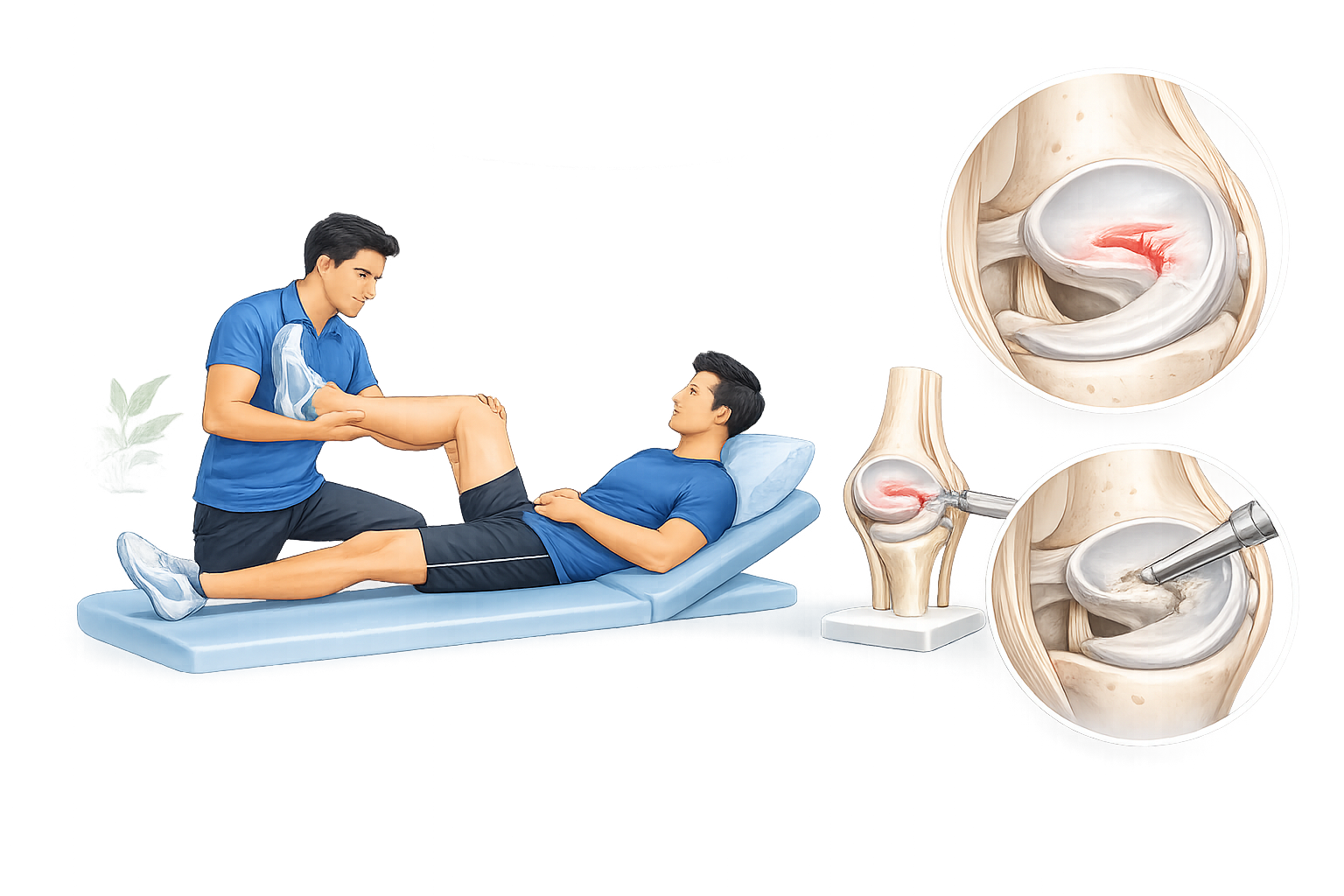
Not all meniscus tears need surgery. Small, stable tears - particularly in older patients with degenerative tears - often respond well to physiotherapy and activity modification. Larger tears, tears causing mechanical symptoms like locking, or tears in younger active patients are more likely to need arthroscopic treatment, which may involve trimming the damaged portion or repairing the tear depending on its location and pattern.
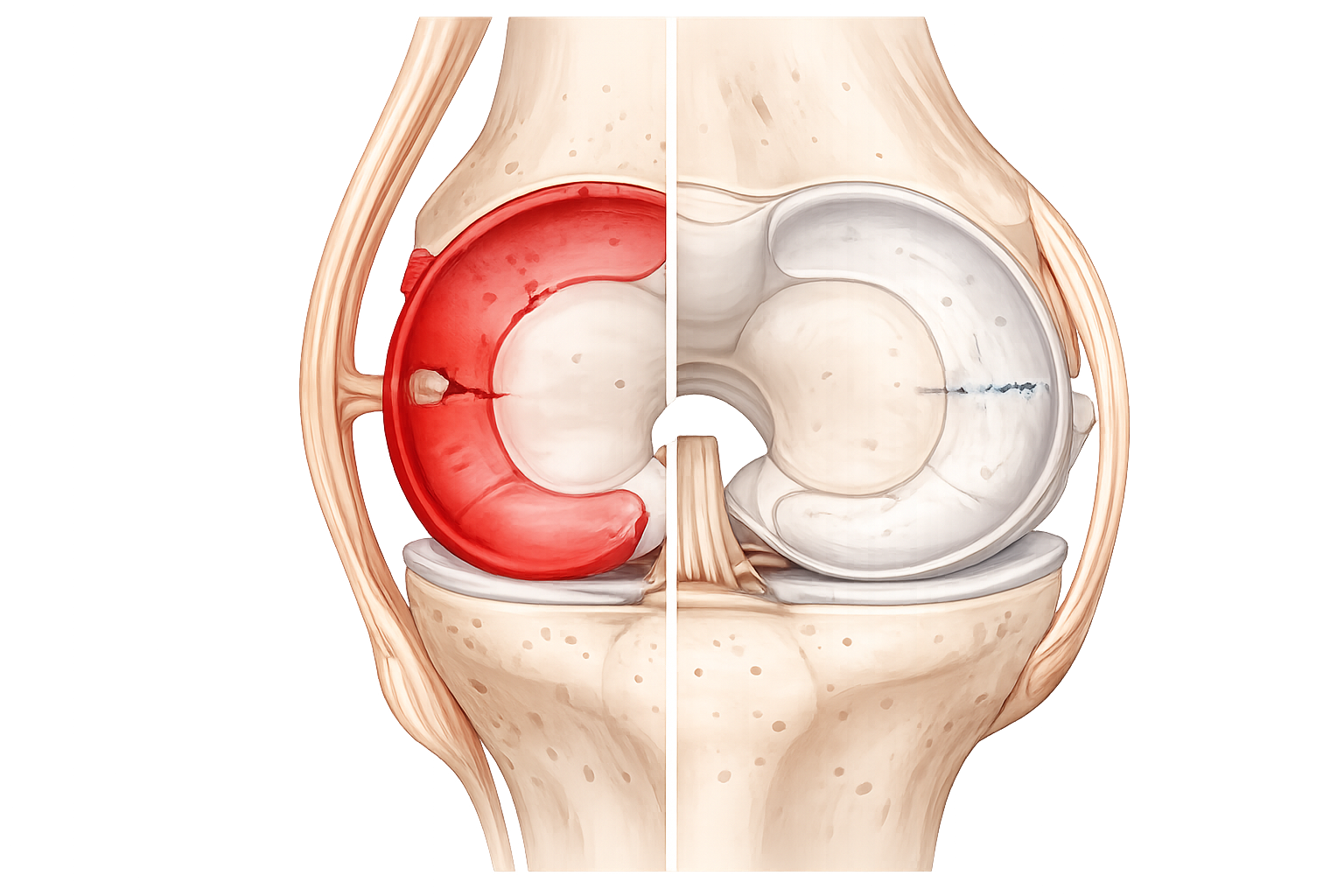
The location and pattern of a meniscus tear significantly affects treatment choice
No. Many meniscus tears, particularly small or degenerative tears in older patients, respond well to physiotherapy, rest, and activity modification. Surgery is recommended when tears cause mechanical symptoms like locking, when conservative treatment fails, or in younger active patients with larger tears.
Meniscus repair stitches the torn edges back together and is preferred when the tear is in the vascular red zone and has healing potential. Meniscus trimming (partial meniscectomy) removes the damaged portion and is used for white zone tears with poor healing capacity. The choice depends on the tear's location, size, and the patient's age and activity level.
Recovery after meniscus trimming is typically faster - most patients walk within days and return to light activity within 4–6 weeks. Meniscus repair requires a longer, more protected recovery of 3–6 months to allow the tissue to heal properly before full weight-bearing sport is resumed.
Yes. An unstable tear can extend over time, and repeated mechanical stress on a damaged meniscus accelerates cartilage wear and increases the risk of early arthritis. If your symptoms include locking, persistent swelling, or giving way, prompt specialist assessment is advisable.
A specialist assessment can determine whether your symptoms are caused by a meniscus injury and whether conservative care or arthroscopic treatment is the best option. Book a consultation with Dr. Om Baghele for expert diagnosis and personalised treatment recommendations.