Knee pain is one of the most common reasons people visit an orthopaedic specialist. Whether it's stiffness when you wake up, pain climbing stairs, a swollen knee after a fall, or constant aching - the cause matters. The right treatment depends entirely on an accurate diagnosis.
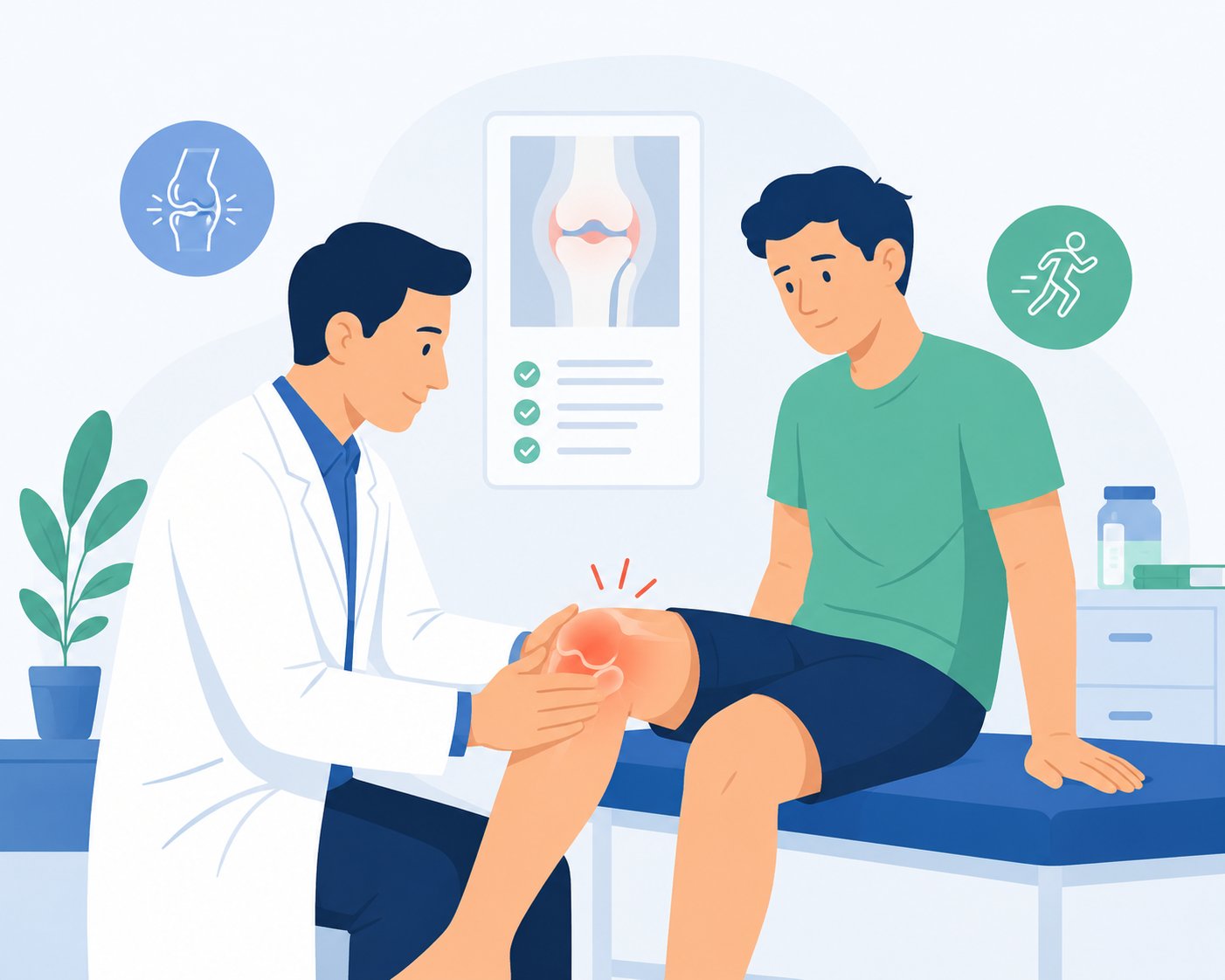
Knee pain is one of the most common orthopaedic concerns affecting people of all ages. Whether it's due to arthritis, sports injury, wear and tear, or sudden trauma, knee pain can significantly impact daily activities, mobility, and quality of life.
Dr. Om Baghele provides comprehensive evaluation and treatment for all types of knee problems - from conservative management to advanced surgical procedures including arthroscopy and knee replacement when needed.
His approach combines accurate diagnosis, clear patient communication, and a recovery-focused treatment plan personalised to your specific condition, lifestyle, and goals.
How long, what triggers it, what makes it worse
Movement range, stability tests, swelling assessment
Joint space, bone alignment, arthritis grading
Ligament, meniscus, or cartilage detail (if needed)
Rule out inflammatory or infective arthritis (if needed)
Most patients with mild to moderate arthritis benefit significantly from a structured non-surgical programme before any procedure is considered.
Surgery is recommended only when non-surgical treatment has been properly tried and failed, or when the joint damage is too advanced for conservative treatment to help meaningfully.
If you're unsure, Dr. Om will give you an honest assessment - including if you're not ready for surgery yet.
Some mild knee pain, especially after minor strain or overuse, can improve with rest and time. However, persistent pain lasting more than two weeks, or pain linked to injury, swelling, or arthritis, usually needs proper evaluation rather than waiting it out.
Knee arthritis most commonly becomes noticeable after the age of 40–50, though it can appear earlier in people with previous injuries, excess weight, or family history. Early evaluation helps slow progression and avoid unnecessary damage.
Yes, many patients with mild to moderate arthritis manage well with physiotherapy, medication, weight management, and injections for years before - or even without ever - needing surgery. Replacement is only recommended when conservative treatment no longer gives adequate relief.
The right type of exercise is usually safe and even helpful - strengthening the muscles around the knee can reduce pain and improve stability. High-impact activity may need to be modified depending on the cause, which is best assessed individually rather than guessed.
Modern knee replacement implants are designed to last 15–20 years or more in most patients, depending on activity level, weight, and overall joint use.
Don't let knee pain hold you back. Get expert evaluation and the right treatment today.