If a previous joint replacement or fracture treatment hasn't given lasting relief, revision surgery can address the problem at its source. Dr. Om Baghele has significant experience in both revision trauma and revision joint replacement, including some of the most complex cases in his practice.
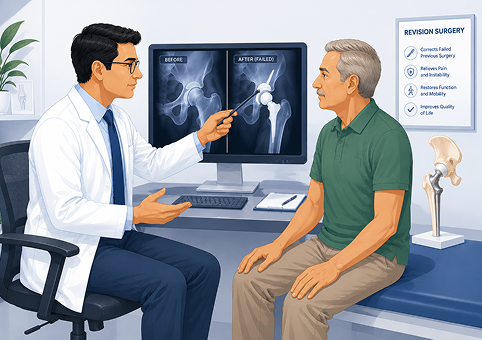
Revision surgery is treatment that corrects or replaces a previous orthopaedic procedure that has failed, loosened, healed incorrectly, or stopped providing relief. It applies both to joint replacements that need to be redone and to fractures that did not heal properly the first time.
Revision cases involve altered bone, scar tissue, and sometimes infection or previous hardware - which requires more detailed planning and surgical judgment than a first-time surgery. These cases benefit from a surgeon with direct, repeated experience in revision work.

When a previous knee or hip replacement has failed - due to loosening, wear, infection, or instability - revision replacement surgery removes the affected implant and restores a stable, functioning joint. Dr. Om's revision case experience includes revision total hip replacement and revision total knee replacement for an infected knee, among his most complex cases.
Not every fracture heals correctly the first time. When previous fixation has failed, or a fracture has not united properly, revision trauma surgery corrects the alignment and supports proper healing. In Dr. Om's practice, revision trauma cases are managed at least as frequently as revision joint replacement, with the majority achieving a successful outcome.
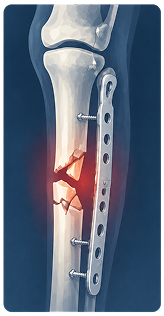

Revision cases are rarely straightforward, and the right outcome depends on careful evaluation of
Any case where a previous joint replacement has failed, loosened, or become infected, or where a previous fracture treatment did not heal correctly, is considered a revision case.
Revision cases are generally more complex due to altered bone, scar tissue, or prior hardware, which is why they require more detailed individual planning. Risk varies by case and is explained clearly before any decision is made.
Yes. If a previous fracture did not heal correctly or the original fixation has failed, revision trauma surgery can correct alignment and support proper healing.
Yes. Many patients considering revision surgery seek a second opinion first for clarity and confidence before proceeding. Dr. Om will give you an honest assessment regardless.
Bring your previous reports, X-rays, and surgical records for an honest specialist evaluation. Dr. Om will assess what went wrong and what can be done.