Fellowship-trained joint replacement specialist with around 200 hip replacements performed. Honest assessment, modern implants, and structured post-operative care - all in Gondia.
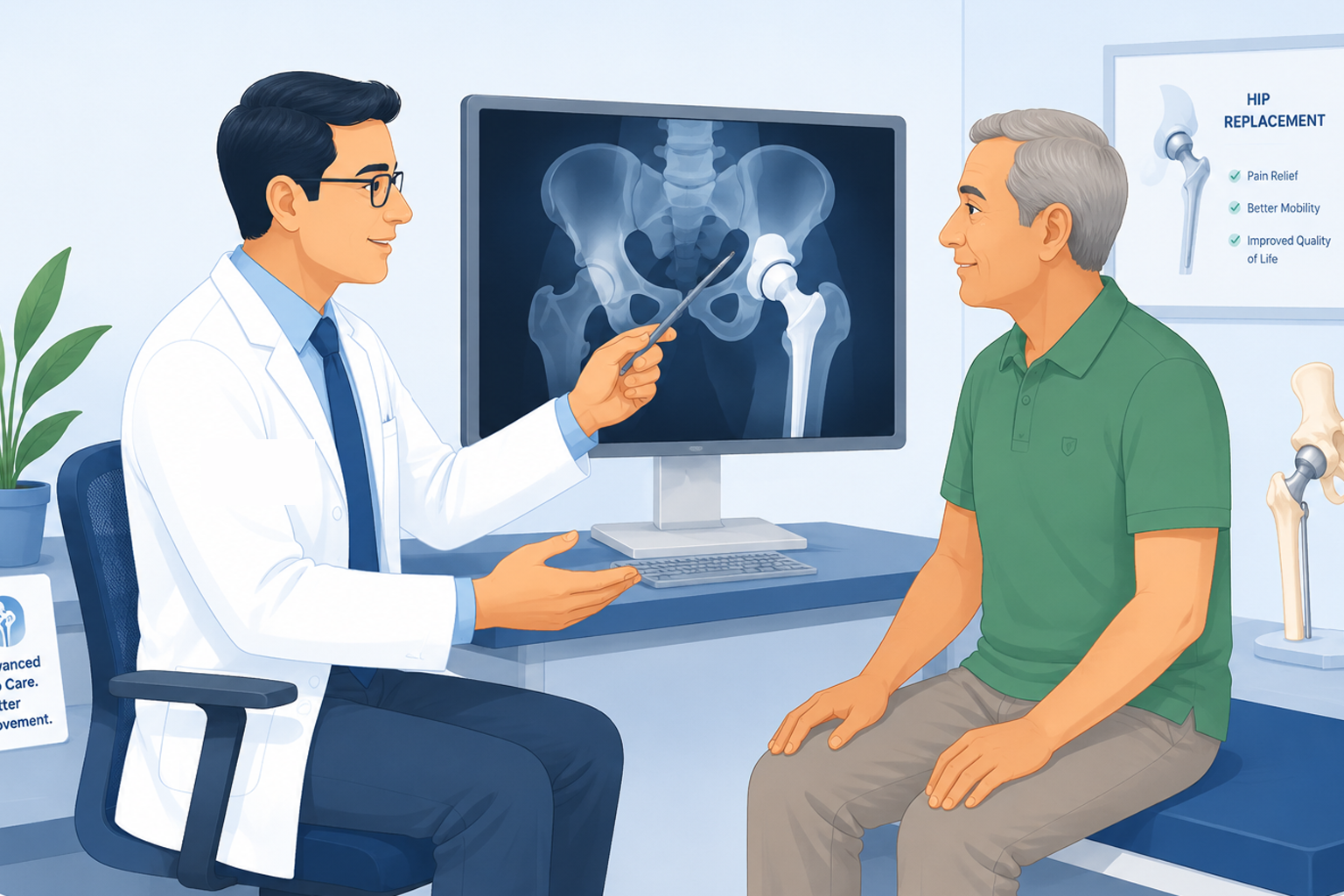
Total hip replacement removes the damaged ball-and-socket joint surfaces and replaces them with precision-engineered implants, relieving pain and restoring movement when the joint is severely affected by arthritis, injury, or degeneration.
Dr. Om Baghele has performed around 200 hip replacement surgeries, with experience spanning patients across a wide age range - including his youngest hip replacement patient, who was just 22 years old.
~200 Hip Replacements Performed
Walking Begins Within 24 Hours
15–20+ Year Implant Lifespan
Surgery recommended only when non-surgical options have been properly tried

Not every patient with hip pain needs surgery. Dr. Om Baghele recommends replacement only when the following criteria are met and conservative treatment has not provided adequate relief.
Not every patient with hip pain needs surgery. Dr. Om Baghele recommends replacement only when the following criteria are met and conservative treatment has not provided adequate relief.
The standard procedure for advanced hip arthritis or joint damage, replacing both the socket and the head of the thigh bone.
For patients whose previous hip replacement has loosened, worn out, or developed complications. Dr. Om's most complex revision cases have included revision total hip replacement.
Supported walking begins, guided by physiotherapy
Hospital discharge - most patients go home walking
Return to light daily activities and independent walking
Full functional recovery with continued improvement
Expected lifespan of modern hip replacement implants
The decision is based on several factors: the severity of your pain, the impact on daily life, X-ray findings showing the extent of joint damage, and whether adequate trials of conservative treatment have been completed without sufficient relief. Dr. Om Baghele will give you an honest, unhurried assessment of all your options - including non-surgical ones.
Yes. Age alone does not decide the need for surgery - the condition, severity, and impact on daily life are what matter. Dr. Om's youngest hip replacement patient was 22 years old.
Most hip replacements are performed under spinal anaesthesia, which is safer for most patients and associated with fewer complications. General anaesthesia is used in specific cases. The anaesthesia plan is discussed with you in advance.
Revision hip replacement can address a previous implant that has loosened, worn out, or developed complications.
Modern hip replacement implants are designed to last 15–20 years or more in most patients.
Don't let hip pain hold you back. Get an honest specialist assessment of your hip condition in Gondia - including if you're not ready for surgery yet.