A sports injury can mean instability, swelling, pain, or a joint that doesn't feel the same after activity. Whether it's a twisted knee, a ligament tear, or persistent pain after playing - the cause matters. The right treatment depends entirely on an accurate diagnosis.
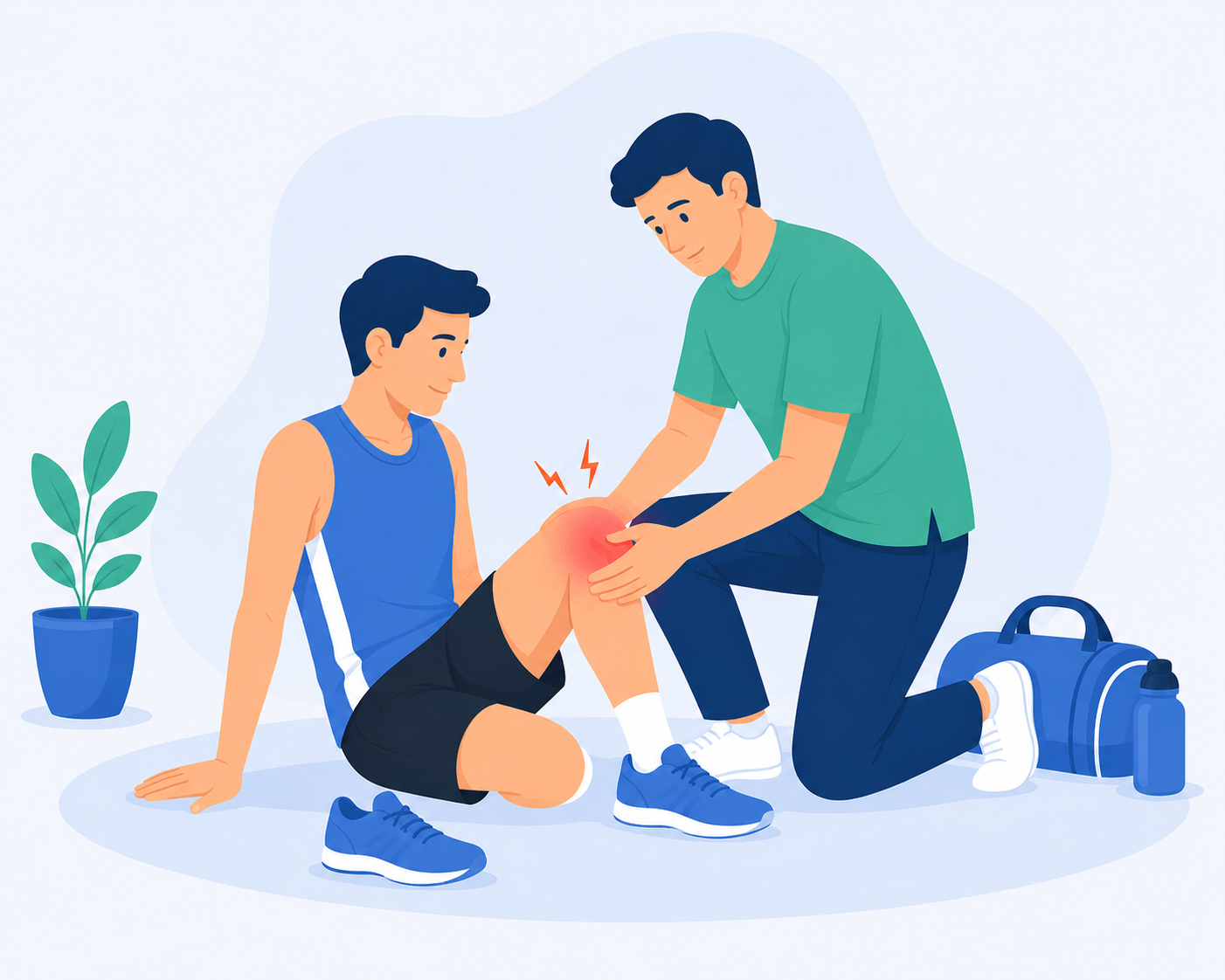
Sports injuries can affect joints, ligaments, tendons, and cartilage, and occur in athletes and active individuals of all ages. Whether from a sudden twist, direct impact, or overuse, these injuries need proper evaluation to prevent long-term instability or repeated injury.
Dr. Om Baghele provides specialist evaluation and treatment for sports-related orthopaedic injuries, including arthroscopic treatment where appropriate.
His approach combines accurate diagnosis, clear patient communication, and a recovery-focused treatment plan aimed at safe and confident return to activity.
How the injury happened, what you felt at the time
Stability tests, range of motion, swelling assessment
Rule out fracture
Ligament, meniscus, or cartilage detail
Rule out infection if relevant (if needed)
Many sports injuries, particularly sprains and partial tears, recover well with a structured non-surgical rehabilitation programme.
Surgery is considered when there's significant instability, mechanical symptoms that prevent activity, or when conservative treatment has failed to restore function.
If you're unsure, Dr. Om will give you an honest assessment - including if you're not ready for surgery yet.
No. Many sports injuries, especially sprains and partial tears, recover well with structured physiotherapy and rehabilitation. Surgery is considered when there's significant instability, mechanical symptoms, or failed conservative treatment.
It's best to be evaluated soon after injury, even if surgery isn't immediately needed, so the diagnosis is clear and the right treatment plan - surgical or non-surgical - can be made early.
Some patients, particularly those with lower activity demands, can return to modified activity with bracing and rehabilitation. Athletes returning to pivoting sports usually benefit more from reconstruction.
Recovery depends on the injury, the joint involved, and the treatment used - ranging from a few weeks for mild sprains to several months for ligament reconstruction.
It's a minimally invasive procedure performed through small incisions, generally allowing a faster recovery than open surgery, though complexity still depends on the specific injury.
Don't let a sports injury keep you on the sidelines. Get expert evaluation and the right treatment today.