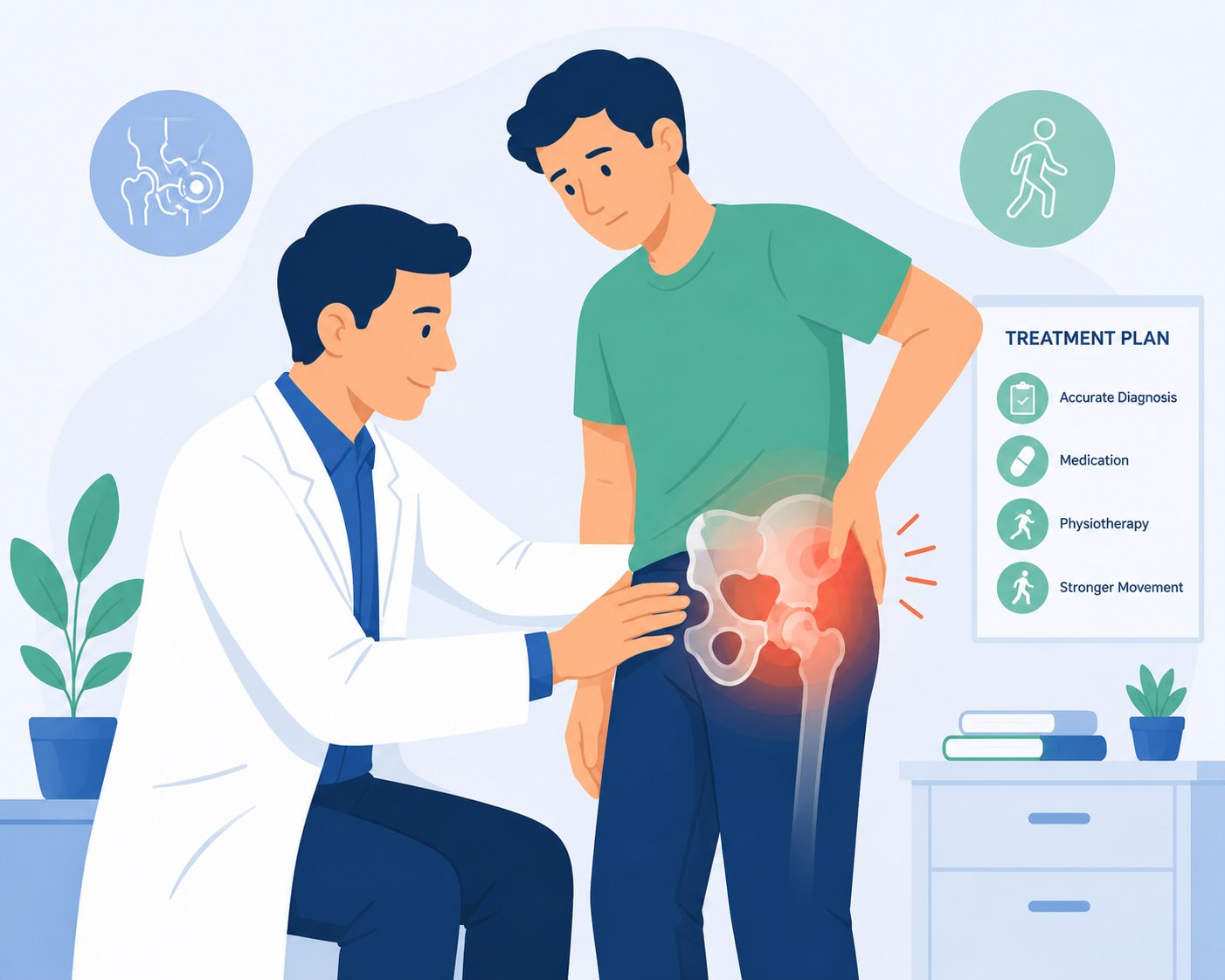
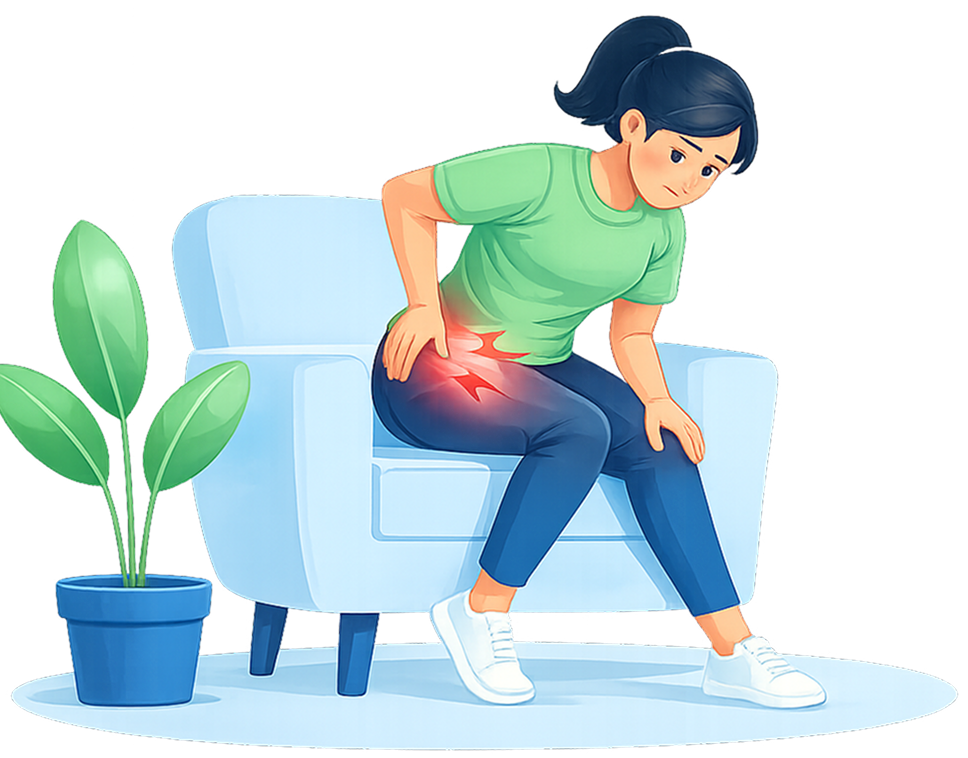
Hip pain can quietly affect walking, sitting, sleep, and independence. Whether it's a dull ache after sitting too long, sharp pain on movement, or stiffness that's getting worse - the cause matters. The right treatment depends entirely on an accurate diagnosis.
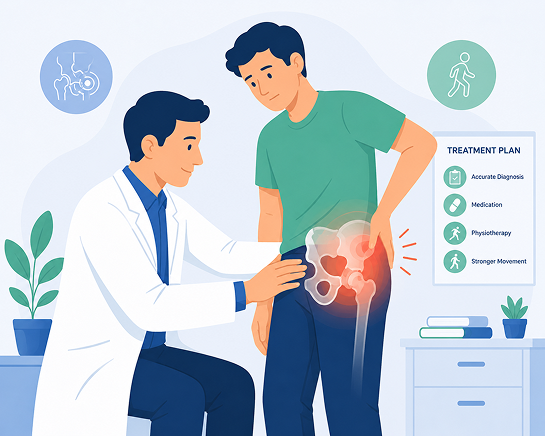
Hip pain is a common orthopaedic concern that can affect people at any age, though it becomes more frequent with age-related joint changes. It may be caused by arthritis, injury, degeneration, or structural problems, and can significantly affect walking, sitting, sleep, and overall quality of life.
Dr. Om Baghele provides comprehensive evaluation and treatment for all types of hip problems - from conservative management to advanced surgical procedures including hip replacement when needed.
His approach combines accurate diagnosis, clear patient communication, and a recovery-focused treatment plan personalised to your specific condition, lifestyle, and goals.
How long, what triggers it, what makes it worse
Movement range, gait assessment, stability tests
Joint space, bone alignment, arthritis grading
Soft tissue or labral detail (if needed)
Rule out inflammatory or infective arthritis (if needed)
Most patients with mild to moderate hip arthritis benefit significantly from a structured non-surgical programme before any procedure is considered.
Surgery is recommended only when non-surgical treatment has been properly tried and failed, or when the joint damage is too advanced for conservative treatment to help meaningfully.
If you're unsure, Dr. Om will give you an honest assessment - including if you're not ready for surgery yet.
Mild hip pain from minor strain can sometimes settle with rest. But pain that persists beyond two weeks, worsens, or affects walking and sleep usually needs proper evaluation rather than waiting it out.
Hip arthritis most commonly becomes noticeable after age 50, though it can develop earlier in people with previous hip injuries, structural issues, or inflammatory conditions.
Yes. Many patients with mild to moderate hip arthritis manage well for years with physiotherapy, medication, and lifestyle changes. Replacement is only recommended when conservative treatment no longer gives adequate relief.
Low-impact exercise is usually safe and often helpful for strengthening supporting muscles. The right type and intensity depends on the underlying cause, which is best assessed individually.
Modern hip replacement implants are designed to last 15–20 years or more in most patients, depending on activity level and overall joint use.
Don't let hip pain hold you back. Get expert evaluation and the right treatment today.