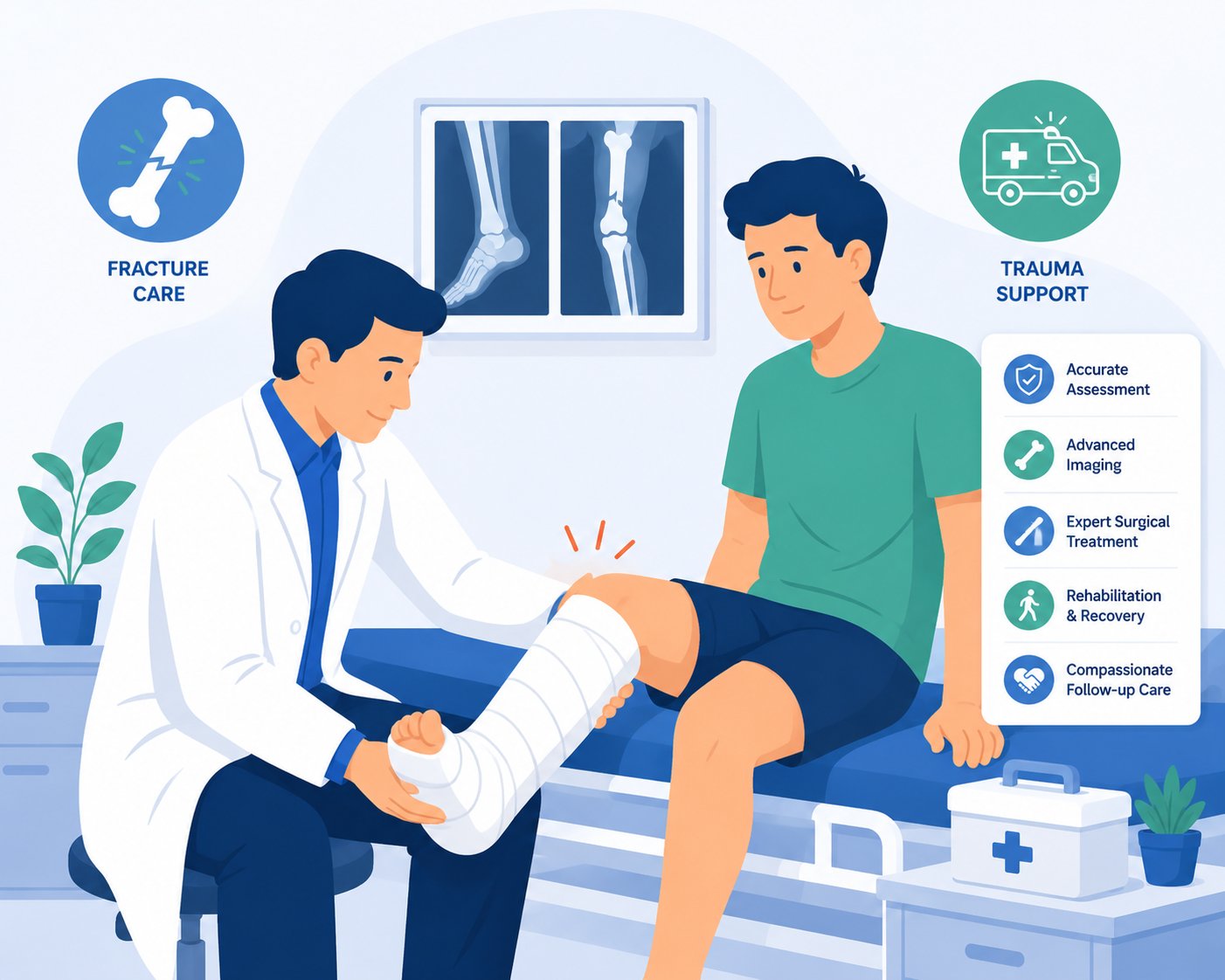
After a fall, accident, or direct injury, timely and correct fracture care is essential for proper healing and long-term joint function. Whether it's a suspected fracture, complex trauma, or a previous injury that hasn't healed right - the right treatment depends entirely on an accurate diagnosis.
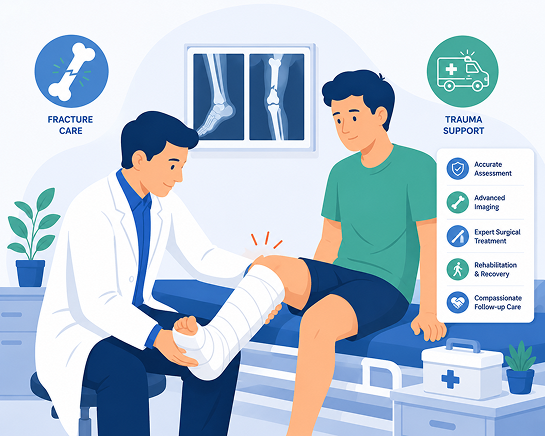
Fractures and trauma require timely orthopaedic care to support proper healing, alignment, and long-term function. This includes everything from simple fractures to complex trauma involving multiple injuries or joint involvement.
Dr. Om Baghele provides specialist fracture and trauma care, including complex cases such as acetabulum surgeries and revision trauma for fractures that didn't heal correctly the first time.
His approach combines accurate diagnosis, careful surgical planning, and a recovery-focused treatment plan personalised to your specific injury and goals.
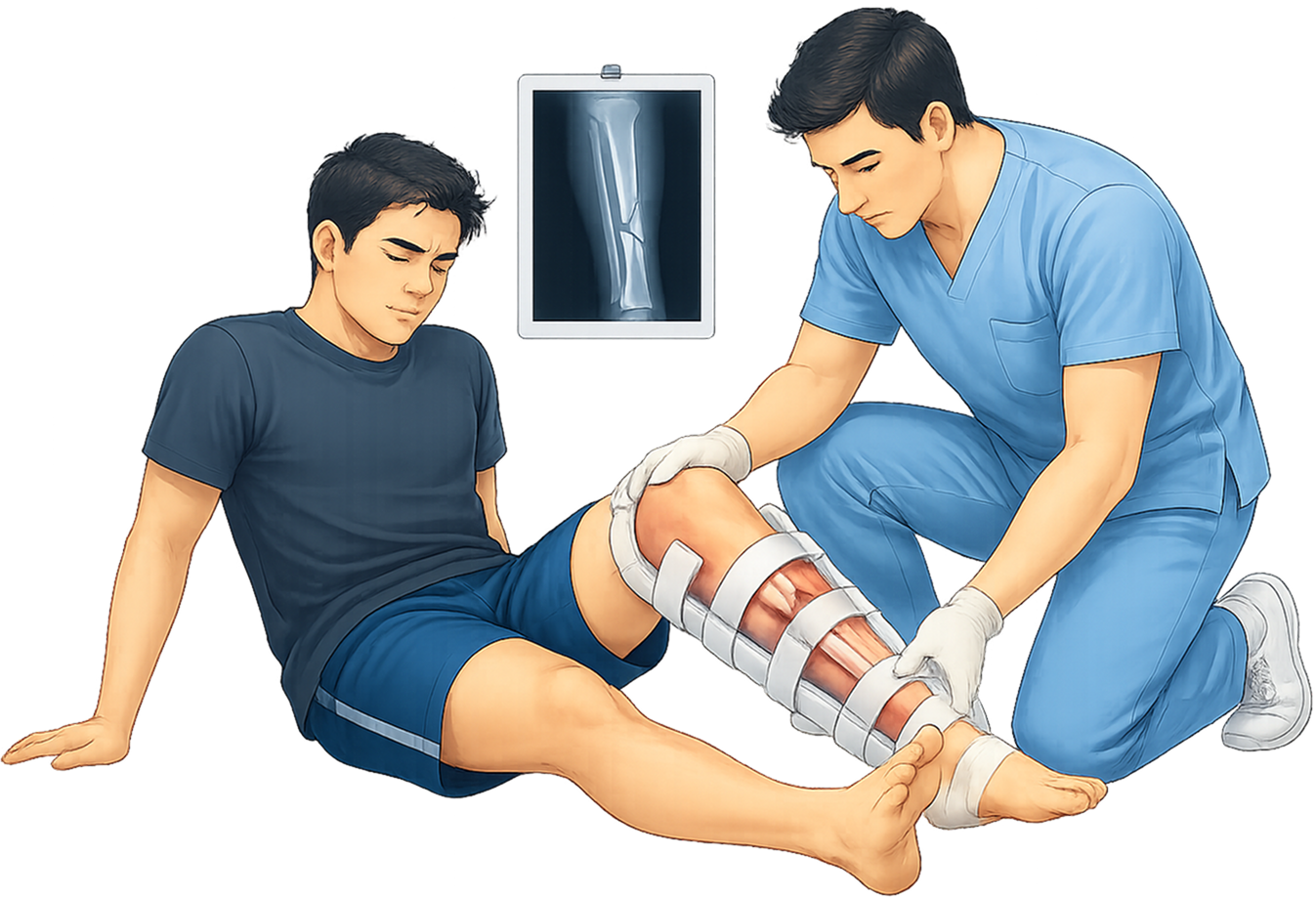
How the injury happened, previous treatment if any
Deformity, swelling, neurovascular assessment
Fracture pattern, alignment
Complex fracture detail (if needed)
Pre-surgical assessment (if needed)
Some fractures can be managed conservatively when alignment and stability are adequate, avoiding unnecessary surgery.
Surgery is required when proper healing cannot be achieved conservatively - including displaced fractures, joint involvement, or previous treatment that didn't heal correctly.
If you're unsure, Dr. Om will give you an honest assessment - including if you're not ready for surgery yet.
A fracture should be evaluated urgently when there is severe pain, visible deformity, inability to bear weight, major swelling, or suspected serious trauma.
No. Some fractures can be managed conservatively with immobilization, while others require surgical fixation for proper alignment and recovery.
This is called non-union or malunion, and may require revision trauma surgery to correct alignment and support proper healing.
Recovery time varies significantly depending on the bone involved, the severity of the fracture, and the treatment used - ranging from a few weeks to several months.
Yes. Revision trauma surgery can often address fractures that didn't heal correctly the first time, though the approach depends on how the bone has healed and how much time has passed.
Don't delay treatment for a fracture or injury. Get expert evaluation today.