Knee Replacement Surgery in Gondia

If your knee pain is severe, constant, and no longer responding to medicines, injections, or physiotherapy — knee replacement may be the most effective long-term solution. Dr. Om Baghele has performed 500+ knee surgeries including complex revision replacements, with AI-assisted planning for precision and long-term implant success.
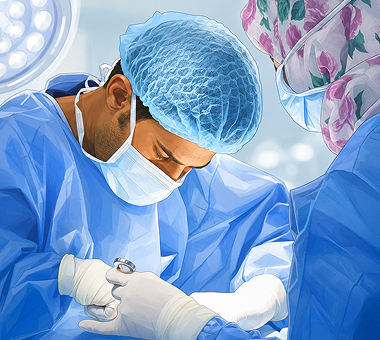
Knee replacement surgery being performed by Dr. Om Baghele, Gondia
500+ Knee replacements performed
15–20+ years Lasting Implants
Experience Including complex revision replacements and bilateral (both knees) procedures with AI-assisted planning

What Knee Replacement Surgery Actually Involves

Knee replacement (also called knee arthroplasty) is a surgery where the damaged cartilage and bone surfaces of the knee joint are removed and replaced with precision-engineered metal and plastic implants. These implants recreate a smooth, pain-free joint surface — restoring movement and eliminating the bone-on-bone friction that causes chronic arthritis pain.

It is one of the most well-studied, evidence-backed surgeries in orthopaedics, with consistently high satisfaction rates and long-lasting outcomes when done correctly.

Evidence-Backed

One of the most well-studied surgeries in orthopaedics

High Satisfaction

90%+ of patients report significant or complete pain relief

Long-Lasting

Modern implants typically last 15–25 years

Conservative First

Surgery recommended only when non-surgical options have been properly tried

Is Knee Replacement Right for You?

  • Severe knee arthritis confirmed on X-ray
  • Pain is constant — including at rest and at night
  • Difficulty walking, climbing stairs, or sitting comfortably
  • Physiotherapy, anti-inflammatory medicines, and injections have not provided lasting relief
  • Quality of life is significantly affected by knee pain

Conservative First

When Surgery Is Not Recommended

  • Pain is mild to moderate and responds to physiotherapy
  • Injections have not yet been properly tried
  • Weight loss alone could significantly reduce joint load
  • Arthritis grade is 1 or 2 — early to moderate

If you're unsure, Dr. Om will give you an honest answer — including if you're not ready for surgery yet.

Total, Partial, or Revision — Which One Do You Need?

Total Knee Replacement (TKR)

The most common type. All three compartments of the knee are replaced. Recommended for advanced, widespread arthritis affecting the whole joint. Most patients experience dramatic pain relief and return to normal daily activities within 6–8 weeks.

Partial Knee Replacement (Unicompartmental)

Only the damaged compartment is replaced, preserving the healthy parts. Suitable for patients where arthritis is limited to one side of the joint. Smaller surgery, faster recovery, more natural feel.

Revision Knee Replacement

A more complex procedure to replace a failed, worn-out, or infected knee implant from a previous surgery. Dr. Om has specific experience with revision knee replacement — including cases referred from other centres.

Surgical Precision

Precision from Day One — AI-Assisted Surgical Planning

Every knee replacement at Dr. Om's practice is planned digitally before you enter the operation theatre.

  • Digital X-ray templating — determines the exact implant size and positioning needed for your anatomy
  • AI-assisted planning tools — analyse alignment, bone geometry, and soft tissue balance
  • Robotics-ready protocols — surgical technique aligned with robotic precision standards

This level of pre-planning reduces the risk of malalignment — one of the most common causes of poor outcomes and revision surgery.

Doctor showing patient knee X-ray on tablet during AI-assisted planning consultation

Your Knee Replacement Journey, Step by Step

Before Surgery

Before Surgery

  • Blood tests, ECG, anaesthesia review
  • Underlying conditions (diabetes, BP) optimised
  • Pre-op physiotherapy in some cases
  • Detailed consent and question session with Dr. Om
Surgery Day

Surgery Day

  • Procedure takes approximately 90 minutes
  • Spinal or general anaesthesia
  • Damaged bone and cartilage removed; implants placed
  • Wound closed; compression bandaging applied
Hospital Stay

Hospital Stay

  • 3–5 days typically
  • Physiotherapy begins the day after surgery
  • Ice, elevation, and pain management protocol
  • Walking with support starts day 1–2
Recovery at Home

Recovery at Home

  • Walking without walker: 4–6 weeks
  • Driving: 6–8 weeks (right knee)
  • Stairs independently: 4–6 weeks
  • Full recovery and return to normal activities: 3–6 months

An Honest Overview — Benefits and Risks

What Most Patients Experience

  • Significant or complete relief from arthritis pain in 90%+ of patients
  • Restored ability to walk, climb stairs, and be active
  • Implants typically last 15–20 years or more
  • Improved sleep, mood, and independence

Risks — Low but Real

  • Infection (minimised with sterile protocols and antibiotics)
  • Blood clot / DVT (prevented with blood thinners and early mobilisation)
  • Stiffness if physiotherapy is not followed
  • Implant loosening over time (usually 15–20 years)
  • In rare cases, revision surgery may be needed

Dr. Om will discuss all risks specific to your case before you consent to any procedure. There are no surprises.

Specialist-Led Knee Replacement Care in Gondia

Previously, patients from Gondia had to travel to Nagpur or Mumbai for knee replacement surgery. Dr. Om Baghele brings that same level of specialist care to Gondia.

~500 knee replacement surgeries performed over 9 years
Fellowship training in joint replacement at Sant Parmanand Hospital, Delhi
Single-stage bilateral knee replacement (both knees, one surgery) experience
Honest approach — not every knee pain patient is recommended surgery
Modern, durable implants with a 15–20+ year functional lifespan
Structured physiotherapy guidance from day one post-surgery

Frequently Asked Questions

When is knee replacement recommended?

Knee replacement is recommended when pain is severe, movement is significantly limited, and non-surgical treatment no longer provides enough relief.

What is the difference between total and partial knee replacement?

Total knee replacement replaces the entire joint surface, while partial replacement is used when damage is limited to one part of the knee, preserving more natural bone and tissue.

Can a previous knee replacement be redone if it fails?

Yes. Revision knee replacement addresses a previous implant that has failed, loosened, or developed complications.

Is robotic knee replacement available right now?

Not yet. Dr. Om is preparing to offer robotic-assisted knee replacement once the technology and system selection are finalized. Conventional knee replacement continues to deliver strong outcomes in his hands.

How long does recovery take after knee replacement?

Recovery varies by patient, but most begin guided movement within the first day or two, with physiotherapy and mobility improving progressively over the following weeks.

Take the First Step Towards a Pain-Free Life

Don't let knee pain hold you back. Get expert evaluation and the right treatment today.

Couple jogging after successful knee replacement recovery