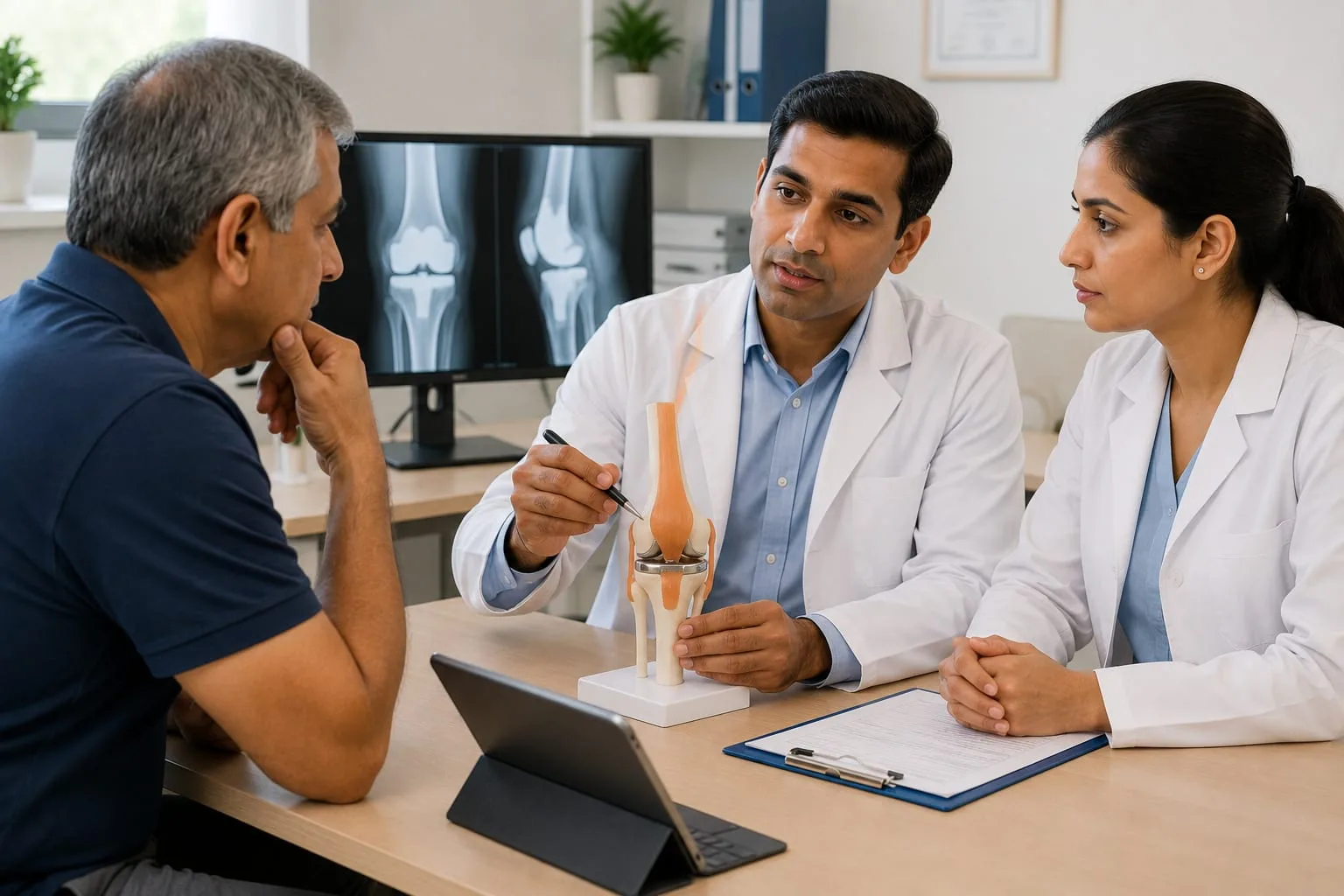


Ask anyone who has considered joint replacement in an Indian town, and you’ll hear at least one infection “horror story”. It’s natural to worry – infection is a serious complication. But WhatsApp rumours often exaggerate risks and ignore the steps hospitals take to prevent them.
This article looks at infection risk after knee and hip replacement in a calmer, fact-based way.
How common is infection, really?
Joint replacement infection (called “periprosthetic joint infection”) is uncommon but serious. Large joint registries report infection rates that are generally in the low single-digit percentages, though exact numbers vary by country, centre and patient risk factors.
This means most patients do not develop infection – but when it happens, it requires focused treatment, sometimes including revision surgery.
Experiencing joint pain? Book a personalised consultation with Dr. Om Baghele.
Instead of fixating on a single percentage, it’s more useful to understand what hospitals do to reduce the risk, what factors increase the risk, and what signs you should watch for at home.
What hospitals do to reduce infection risk
Standard protocols in well-run centres typically include:
- Pre-operative screening for infections elsewhere in the body.
- Skin preparation – antiseptic cleaning before the operation.
- Antibiotics – given at specific times before and during surgery.
- Sterile operating theatre conditions – controlled airflow, protective clothing, instrument sterilisation.
- Careful handling of tissues during surgery, minimising dead space and bleeding.
These steps don’t remove risk completely, but they significantly reduce it.
Factors that make infection more likely
Infection risk can be higher if:
- Diabetes is poorly controlled.
- The patient is significantly overweight.
- There is a previous infection or skin problem near the surgical site.
- Immune system problems are present.
This is why surgeons insist on optimising conditions like diabetes, BP and weight where possible before surgery.
What you can do before surgery
Patients are not just passive in this process. You can help reduce risk by:
- Working with your physician to bring blood sugar and BP into target ranges.
- Stopping smoking if you smoke, as it impairs wound healing.
- Informing your surgeon of any active infection – dental, urinary, skin – before surgery.
What you can do after surgery
After you go home:
- Follow wound-care instructions carefully – keeping dressings clean and dry.
- Avoid soaking the wound in water until your surgeon or physiotherapist clears you.
- Watch for signs like increasing redness, warmth, discharge, fever or chills.
If you notice any of these, contact your surgeon or hospital promptly rather than waiting “to see if it settles”. Early detection often makes treatment simpler.
Questions to ask your surgeon
Instead of asking “Will I get infection?”, ask:
- “What is your hospital’s infection prevention protocol?”
- “What do you expect me to do before and after surgery to reduce risk?”
- “How do you handle cases where infection does occur?”
Key takeaways
- Infection after joint replacement is uncommon but serious – it deserves respect, not panic.
- Hospitals use multiple layers of prevention – screening, antibiotics, sterile technique and post-operative care.
- Your own role – controlling diabetes, not smoking, following wound-care instructions – is an important part of risk reduction.
- Knowing the signs to watch for and having a clear line of communication with your surgical team are more valuable than worrying based on rumours.