
Many of the questions Indian patients ask after knee or hip surgery aren’t about medical terms – they’re about everyday positions:
- “Will I ever sit on the floor again?”
- “Can I use an Indian toilet?”
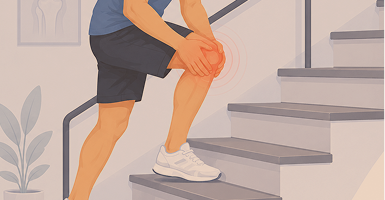
- “Will I be able to climb stairs without fear?”
This guide offers a realistic, step-by-step view of how floor-sitting, squatting and stairs usually change after knee or hip surgery – especially joint replacement.
Before surgery: Knowing your priorities
If you’re used to sitting cross-legged, praying on the floor, using Indian toilets, or climbing steep stairs every day, tell your surgeon this before surgery. It influences:
- Which implant type may suit you better.
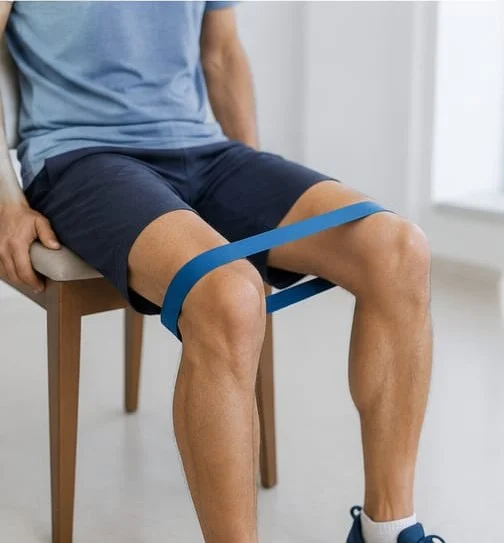
- How your rehabilitation will be planned.
- What expectations are realistic for your specific case.
Ignoring these questions until after surgery often leads to disappointment or unsafe attempts at deep bending.
Experiencing joint pain? Book a personalised consultation with Dr. Om Baghele.
Early recovery: What is temporarily off-limits
For the first few weeks after knee or hip replacement, most surgeons advise:
- No deep squatting. Your joint and soft tissues need time to heal.
- No floor sitting. Getting up and down from the floor risks falls and strain.
- Stairs only with supervision and support, once physiotherapy clears you.
It’s not about taking away your independence. It’s about giving the implants and soft tissues time to settle before you put them under high stress.
Long-term after knee replacement: Floor-sitting and squats
Over the longer term, knee replacement patients vary in what they can do. Some can sit cross-legged on the bed or a slightly raised platform; many can manage stairs confidently. Deep squatting is more limited.
General patterns (your case may differ):
- Cross-legged sitting: Often possible to some extent on a soft surface, once range of motion improves. Deep, prolonged floor-sitting is usually discouraged because it places high flexion demands on the implant.
- Squatting: Shallow, supported squats may be possible; full deep squats are usually not recommended, especially with certain implant designs.
- Stairs: Most patients regain the ability to climb stairs, often one step at a time initially and then normally as strength improves.
Long-term after hip replacement: Flexion and safety
Hip replacement tends to be stricter about certain positions:
- Deep flexion (bending the hip past 90°) and cross-legged positions can increase the risk of dislocation in some patients.
- Sitting on low surfaces or the floor makes it harder to keep the hip within safe angles.
Your surgeon and physiotherapist will usually give clear hip-safety guidelines, which may include:
- Avoid sitting on very low chairs or floors, especially in the first few months.
- Use raised seating and toilets where possible.
- Be cautious with twisting movements while the hip is bent.
Indian toilets: Practical workarounds
If your house has only Indian toilets, recovering after knee or hip surgery needs planning:
- Some families temporarily install a commode chair over an Indian toilet.
- Others use a portable commode in a nearby room.
- In some homes, a small bathroom renovation adds one Western-style seat for older family members.
These changes don’t have to be permanent, but they can make the first few months much safer and easier.
Stairs: Regaining confidence
With structured physiotherapy, most joint replacement patients:
- Start with one-step-at-a-time stair training using a railing.
- Progress to more normal stair climbing as strength and balance improve.
Your physiotherapist will teach you “up with the good leg, down with the operated leg” as a simple rule initially. Over time, many patients climb stairs almost as they did before – sometimes with a hand on the railing for reassurance.
Questions to ask your surgeon
Before surgery, ask your surgeon:
- “What do patients like me usually manage in terms of floor-sitting and squats?”
- “Will I be able to use my current bathroom comfortably after recovery?”
- “What can we modify at home to make things safer and easier?”
Getting a realistic answer to these questions before surgery makes recovery less frustrating. It’s better to know that some positions will need to change than to find out by painful trial and error.
Key takeaways
- Cross-legged sitting, squats and stairs are not simply ‘yes or no’ – they change over time and depend on your implant, your rehab and your pre-surgery condition.
- Many patients regain comfortable stair use and some floor-sitting. Deep, prolonged squats and very low toilet use are usually more limited after joint replacement.
- Planning practical bathroom and home adjustments before surgery can make recovery in Indian homes much smoother.